02 / Project context
Reveal the project decisions
A case study joins the finished work to the conditions that shaped it. The reader should understand the task, your contribution and the choices that matter without reading a transcript of every working day.
Use process selectively. A sketch earns its place when it explains a decision; a paragraph earns its place when it changes how the images are understood.
Explore cases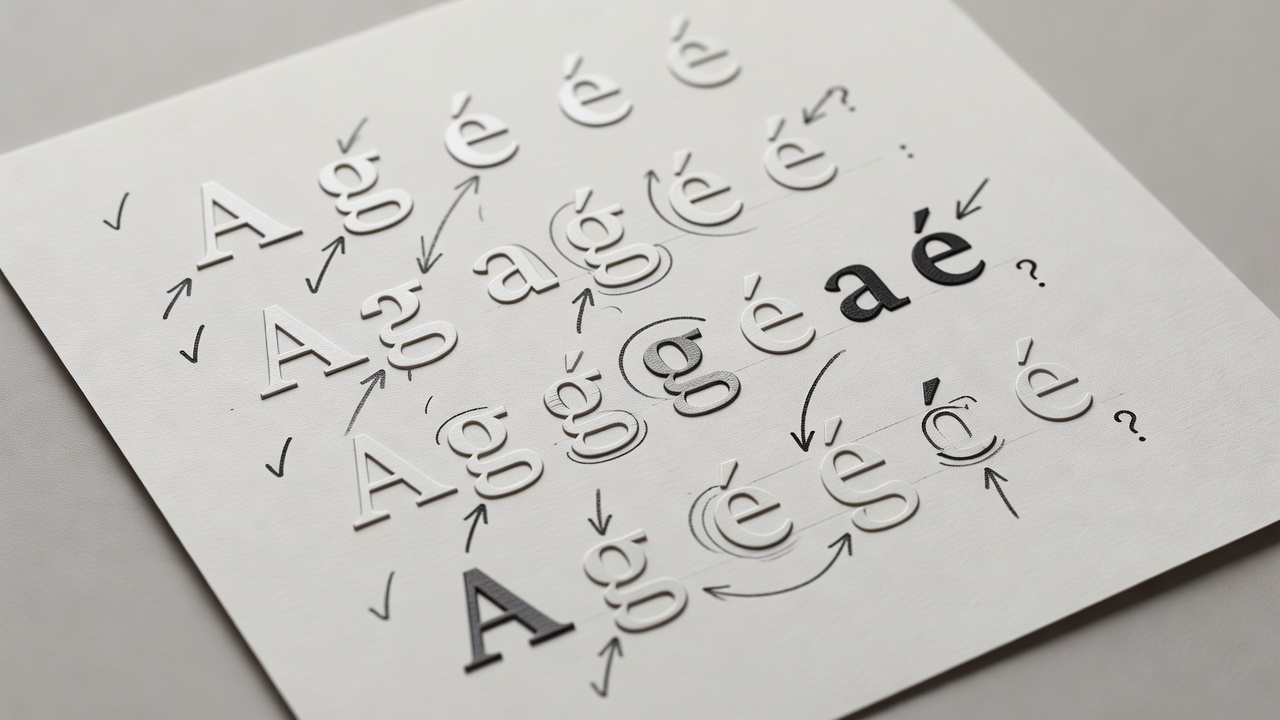
Give the reader a compact opening
Start with the project’s identity and purpose. Describe what was being made, who it was intended for and why the task existed. Add your role, the collaboration context and the project date where those details help establish authorship.
Avoid beginning with a broad statement about the importance of design. The opening should belong to this project, not to every project you might ever publish. If the brief was self-initiated, say so before the reader has to infer it from a fictional client name or an overly polished mockup.
Opening checklist
Project and medium. Audience or use. The central need. Your specific responsibility. Any important limitation on what can be shown.
Those facts can sit in a short paragraph and a small credit list. They do not need an elaborate dashboard or a repeated label for every sentence.
Explain a decision through its consequence
“I chose a bold typeface” names an action but does not explain its value. A more useful account connects a choice to a reading condition, a production constraint or a distinctive part of the brief. The reason should be concrete enough that the reader can inspect it in the work.
For example, an editorial layout might require captions to remain easy to find across image-heavy spreads. Show the spread and identify the hierarchy rather than presenting a detached list of design adjectives. If an illustration needed to communicate at a small size, compare a meaningful detail with the final reduced view.
Do not manufacture a rational explanation for every intuitive choice. It is reasonable to describe experimentation, visual judgement and unresolved alternatives. Precision is more useful than pretending the process was inevitable.

Show the process that changed the result
A sequence of nearly identical screenshots can hide the important moment. Choose the test, comparison or revision that explains a real change. Label what the reader is looking at and why it matters.
A discarded direction can be useful when the reason for rejecting it clarifies the brief. It is less useful when it becomes a gallery of everything you tried. Keep rough work readable, but do not cosmetically rebuild it to imply a process that did not happen.
If research involved participants, protect their privacy. Do not reproduce identifiable responses or photographs merely because they look convincing in a case study.
Read identity work as a system
Paula Scher’s work for The Public Theater is a useful reference for considering typography beyond a single logo. Ask how a visual language becomes recognisable across changing messages and formats. The point is not to borrow its appearance, but to notice the relationship between a central idea and its applications.
Studio Dumbar offers another lens through identity work that includes motion. When a system changes over time, one still image cannot explain all its behaviour. A portfolio can use a small, controlled sequence of frames and an accompanying description rather than relying on constant animation.
Pentagram’s work for the MIT Media Lab is also a named reference for studying an identity with multiple related expressions. In your own project, explain the rule and then show enough variation to make the rule credible.
Separate outcomes from assumptions
State only outcomes you can substantiate and are allowed to share. A printed publication, implemented identity or completed exhibition is a different kind of evidence from improved engagement or increased sales. Do not treat visual polish as proof of commercial impact.
When metrics are unavailable, describe what was delivered and what the work demonstrates. You may discuss what you would test next, provided that planned evaluation is clearly distinguished from a completed result. A reflection on a limitation often tells the reader more than a vague claim that the project was successful.
Credit photography, typefaces, collaborators and other third-party material where appropriate. A typeface licence or a commissioned image does not automatically give you permission to distribute its underlying files.
Edit for a scan and a close read
Give the case study a visible spine: context, selected decisions, final work and reflection. Use descriptive headings so a reader can enter midway without losing the thread. Place captions beside the images they explain rather than in a distant block of text.
Read the page once using only headings, captions and images. Then read the paragraphs without the images. Both routes should be coherent, even though each offers a different depth. Remove repeated explanations and keep the richest detail close to the work it illuminates.
Once the story is clear, make its place in the wider portfolio easy to find. A well-written case study still needs a visible route back to the collection.